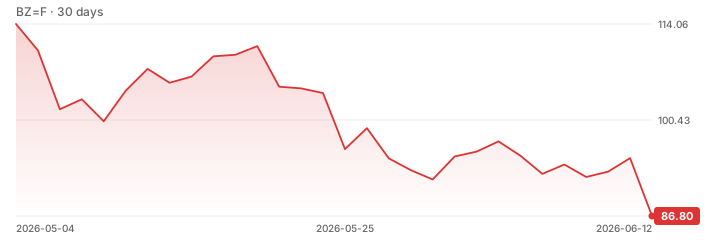
Brent crude prices jumped sharply on Monday as the United States and Iran resumed direct military hostilities, marking a significant escalation in the region.
The conflict has moved beyond proxy engagements, with both sides targeting military infrastructure in the Gulf and Levant.
U.S. Central Command confirmed that Iran launched two ballistic missiles targeting American forces stationed in Kuwait.
In response, Washington announced airstrikes on dozens of targets, while Tehran claimed to have struck U.S. military bases in Jordan, Bahrain, and Kuwait.
The direct exchange of fire represents a stark departure from the de-escalation seen in recent weeks.
This development reverses the trend observed earlier in July, when Brent crude had retreated to pre-war lows as shipping through the Strait of Hormuz appeared to normalize. The return of direct strikes on Gulf-based assets immediately re-prices the risk of supply disruption, forcing traders to reassess the security of regional export routes.
The escalation undermines the fragile stability that had allowed energy markets to digest recent geopolitical tensions.