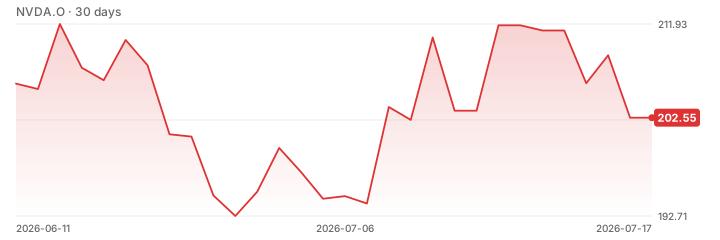
The emergence of low-cost artificial intelligence models in China is being framed by market analysts as a potential tailwind for major semiconductor suppliers, including Nvidia and Micron, rather than a threat to their market share.
The argument centers on the idea that cheaper inference capabilities can democratize AI adoption, thereby increasing the total volume of compute and memory required across the industry.
This perspective challenges the prevailing narrative that China’s push for technological self-sufficiency will inevitably erode demand for US-made chips.
Instead, the lower barrier to entry for AI deployment could accelerate the rollout of applications that rely on high-performance hardware, sustaining the capex cycle for leading chipmakers.
The dynamic suggests that even if Chinese firms develop competitive software layers, the underlying hardware demand may remain robust.
Nvidia, in particular, stands to benefit if the proliferation of AI models drives broader enterprise adoption.