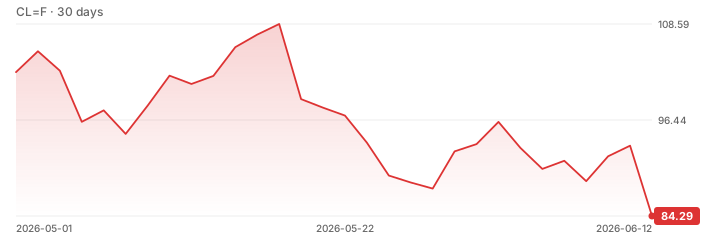
China's role as the world's largest oil importer has evolved from a passive price-taker to the primary determinant of global crude valuations.
Market participants are increasingly viewing Beijing's import volumes as the critical variable that will decide whether oil prices sustain recent gains or face downward pressure, effectively superseding traditional supply-side narratives dominated by OPEC production decisions.
This shift in market dynamics follows a period of significant volatility where geopolitical tensions and supply constraints initially drove prices higher.
However, the recent agreement between the United States and China for Beijing to purchase American crude oil has introduced a new layer of complexity.
The deal, announced by U.S. President Donald Trump, signals a potential normalization of trade flows that could stabilize supply chains but also underscores Beijing's leverage in negotiating terms that favor its domestic energy security.
Traders are now closely monitoring Chinese import data as a leading indicator for global demand health.