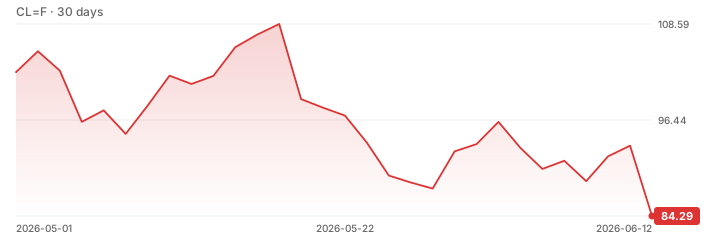
China is not expected to release strategic petroleum reserves to mitigate the impact of rising oil prices following renewed US military strikes on Iran.
The decision reflects a strategic shift in Beijing’s approach to energy security, prioritizing the conservation of reserves over short-term price stabilization as the Strait of Hormuz remains closed to commercial traffic.
The closure of the strait, a critical chokepoint for global oil trade, has triggered immediate repricing in energy markets.
With US strategic reserves at their lowest levels in more than four decades, the absence of a coordinated buffer from major consumers like China amplifies upward pressure on Brent and WTI crude.
Market participants are adjusting to a scenario where supply disruptions are met with limited intervention from state stockpiles.
Analysts note that China’s rapid transition to electric vehicles is fundamentally reshaping its fuel demand profile, reducing the urgency to protect domestic consumers from volatile import costs.