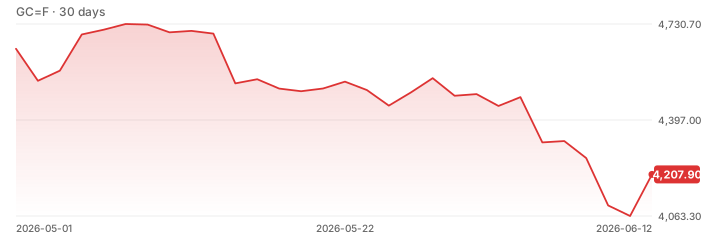
The long-standing inverse relationship between the US dollar and gold is fracturing, with both assets moving in tandem as global reserve managers rethink their currency allocations.
This decoupling marks a structural break from decades of market behavior, where a stronger dollar typically weighed on gold prices.
Instead, investors are now observing a scenario where gold retains its safe-haven appeal even as the dollar remains resilient, driven by a broader diversification away from US Treasuries.
According to a survey cited in recent media reports, 74 central banks are actively planning to reduce their holdings of US dollars, signaling a significant shift in global reserve management strategies.
This coordinated move by sovereign wealth funds and central banks is providing a new floor for gold prices, independent of traditional interest rate dynamics.
The World Gold Council has noted that gold is entering a critical phase in the second half of 2026, with its trajectory increasingly determined by this interplay between central bank policy and geopolitical stability rather than purely macroeconomic indicators.