European financial markets are bracing for a potential shift in the European Central Bank's monetary policy stance, with traders and analysts warning that a rate hike in September could materialize if the conflict in Iran intensifies.
The scenario represents a stark reversal from the ECB's recent trajectory, which included a 25 basis point increase in June followed by a pause, and underscores the vulnerability of the eurozone's inflation outlook to external supply shocks.
The concern stems from the direct link between geopolitical instability in the Middle East and energy prices.
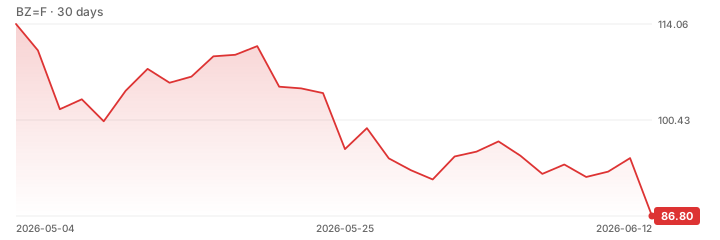
A significant escalation in the Iran region would likely disrupt oil supplies, driving up Brent crude and diesel costs.
This surge in energy prices would feed directly into core inflation metrics, potentially forcing the ECB to abandon its current hold and resume tightening to anchor price expectations.
This dynamic mirrors the central bank's previous actions, where energy-driven inflation spikes necessitated aggressive rate adjustments.