West African leaders have formally approved the construction of a $25 billion natural gas pipeline linking Nigeria to Morocco, marking a decisive political milestone for one of the continent’s most ambitious infrastructure projects.
The agreement, reached at a recent summit of ECOWAS heads of state, clears the way for a project that has long been debated but stalled by geopolitical and logistical hurdles.
The approval is expected to bolster sentiment across African energy equities and infrastructure contractors, as the project promises to diversify export routes for Nigerian gas and enhance energy security for North African markets.
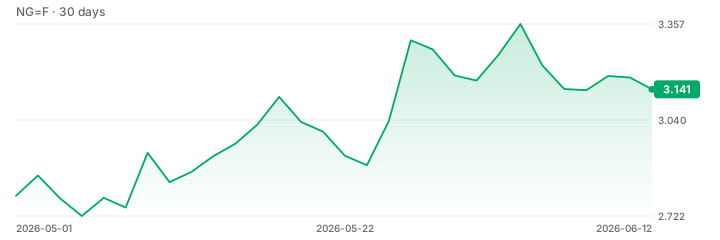
While no immediate price impact was evident in global natural gas benchmarks, the development underscores a growing regional push to reduce reliance on traditional European supply chains and develop intra-African energy corridors.
The pipeline, which would traverse several West and North African countries, faces significant execution challenges, including financing, security concerns in transit zones, and environmental assessments.
However, the political consensus achieved at the summit suggests that member states are prioritizing energy integration as a key pillar of regional economic development.