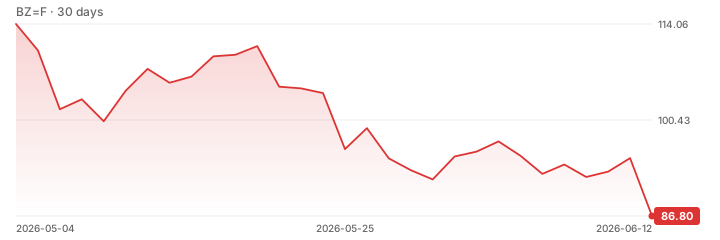
Energy markets are showing signs of stabilization after a period of heightened volatility driven by geopolitical tensions in the Strait of Hormuz and shifting macroeconomic data.
Recent reporting from Austrian media outlets highlights that household energy prices, including gas, diesel, and gasoline, have seen mixed trends in June, reflecting the complex interplay between global supply risks and local demand dynamics.
2% year-on-year in June, extending a streak of three months at that level.
The stabilization comes as the risk premium associated with shipping disruptions in the Strait of Hormuz appears to be moderating.
Earlier in July, Iran threatened forceful responses to tankers deviating from approved routes, while Oman's diplomatic opacity on fees deepened uncertainty for shipping operators. These events had previously fueled spikes in Brent crude prices and freight rates, but the latest market data suggests a cooling of immediate panic.
Macroeconomic factors are also playing a role in the current energy price environment.
In the US, consumer price inflation slowed significantly in June, with the annual rate dropping to 3.5% from 4.2% in May, largely due to a sharp decline in gasoline prices. Meanwhile, in Europe, Spain's consumer price index remained unchanged at 3.2% year-on-year in June, extending a streak of three months at that level. These developments suggest that while energy costs remain a significant component of inflation, the immediate pressure is easing in some regions.