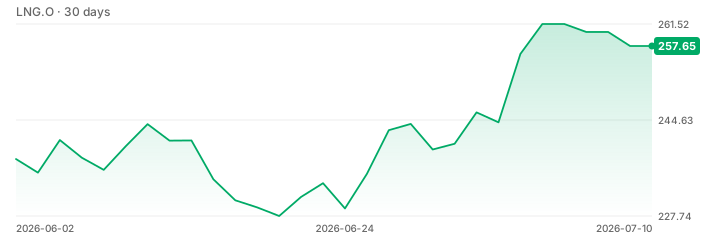
The European Union spent €1.5 billion on Russian natural gas in May, marking the highest monthly expenditure in nearly a year and a half.
The figure, derived from Eurostat data, reflects a combination of sustained pipeline flows and liquefied natural gas (LNG) imports, signaling that demand for Russian energy remains resilient in parts of the bloc despite broader decoupling efforts.
However, the country's imports fell by 14% in value terms between January and May compared to the same period last year.
Hungary continues to lead EU members in purchasing Russian pipeline gas.
However, the country's imports fell by 14% in value terms between January and May compared to the same period last year.
This decline contributes to a wider trend: total EU purchases of Russian natural gas, both pipeline and liquefied, dropped 10% in the first five months of 2026 relative to the prior year.
The data underscores the uneven nature of Europe's energy transition.