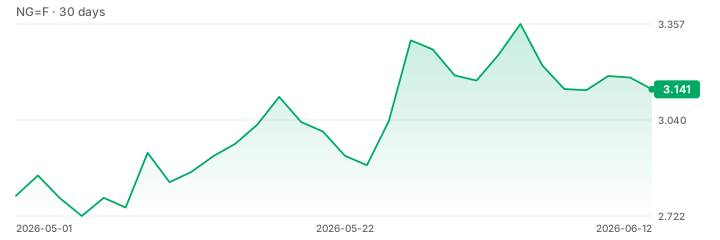
The European Union spent €1.5 billion on Russian natural gas in May, marking the highest monthly expenditure in nearly a year and a half.
The figure, derived from Eurostat data, reflects a combination of sustained pipeline flows and a significant increase in liquefied natural gas (LNG) purchases, according to calculations by TASS.
Russian LNG deliveries to the EU climbed 17% year-on-year in the first half of 2026, reaching approximately 13.
This spending peak occurs against a backdrop of tightening European gas storage levels, which hit a five-year low earlier this year as June injections slumped 19%. The high cost of imports highlights the financial pressure on European utilities and governments as they navigate a supply landscape still heavily influenced by Russian volumes, despite political efforts to diversify sources.
Russian LNG deliveries to the EU climbed 17% year-on-year in the first half of 2026, reaching approximately 13.4 billion cubic meters. This surge in seaborne gas has helped offset declines in pipeline infrastructure, such as the Nord Stream sabotage, which led to criminal charges in Germany in early July. Russia remains the bloc's third-largest gas supplier, behind Norway and the United States, having supplied roughly 22.1 billion cubic meters in the first half of the year.
The data suggests that while Europe is actively seeking alternative suppliers, the immediate market reality involves paying premium prices for Russian gas to fill storage gaps ahead of winter.
This dynamic complicates the EU's energy security strategy, as high import bills coincide with concerns over whether storage targets will be met by the heating season.