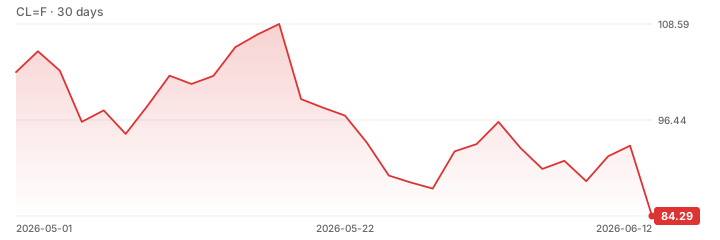
Retail gasoline prices are proving remarkably resilient despite a clear downward trend in crude oil benchmarks, creating a frustrating dynamic for consumers and traders alike.
While wholesale energy markets have adjusted to easing supply constraints and reduced geopolitical risk premiums, the pump has not followed suit.
The primary driver of this divergence is not refinery margins or distribution costs, but rather the structure of tax revenues, which are absorbing much of the decline in underlying commodity costs.
This structural disconnect highlights a growing friction between global commodity repricing and local fiscal policy.
As Brent crude and WTI have softened, market participants had anticipated a corresponding pass-through to retail fuel prices.
Instead, the benefit of lower input costs is being captured by tax authorities, leaving the final price to the consumer largely unchanged.