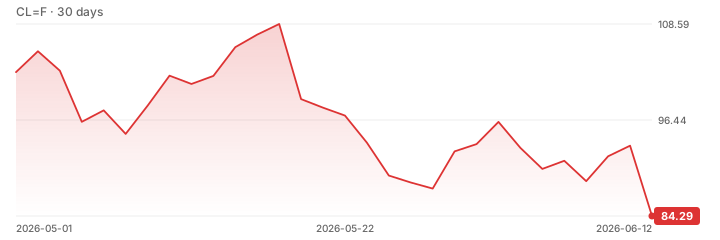
Political pressure is mounting on the German government to intervene in fuel markets as gasoline and diesel prices surge, driven by a combination of summer travel demand and escalating geopolitical risks in the Middle East.
The federal coalition, traditionally committed to free-market principles and resistant to direct price controls, is now facing intense scrutiny from opposition parties and consumer groups demanding relief for households and businesses.
The debate centers on whether the state should impose temporary price caps or reduce excise duties to offset the spike in crude oil costs.
While the government has so far rejected such measures, arguing that market mechanisms should determine pricing, the political calculus is shifting as fuel costs become a prominent issue ahead of upcoming regional elections.
Critics argue that inaction risks alienating voters who are already feeling the pinch from broader inflationary pressures.
This development in Germany mirrors a wider trend across Europe and the United States, where energy prices have become a significant political liability.