Consumer price inflation in Germany accelerated sharply to 2.8% year-on-year in July, reversing the cooling trend seen in recent months.
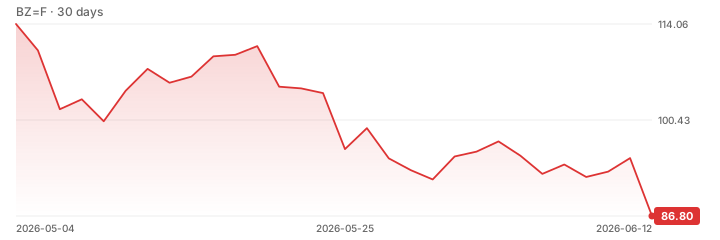
The surge was primarily driven by the expiration of the government's temporary fuel tax rebate, which had previously suppressed energy costs for households and businesses.
3% compared to the same month last year, marking a significant base-effect reversal as the subsidy support was withdrawn.
According to data from the Federal Statistical Office (Destatis), energy prices rose 8.3% compared to the same month last year, marking a significant base-effect reversal as the subsidy support was withdrawn.
The jump in headline inflation underscores the sensitivity of German price dynamics to fiscal measures.
While the underlying trend in services and goods remains relatively contained, the removal of the fuel discount has immediately translated into higher pump prices and transport costs.
This development adds a layer of complexity to the inflation picture in the eurozone's largest economy, where policymakers have been closely monitoring the trajectory of price stability.