Consumer price inflation in Germany slowed to 2.3% year-on-year in June, down from 2.6% in May, according to data released by the Federal Statistical Office (Destatis).
The decline marks a further easing of price pressures in Europe’s largest economy, driven primarily by lower energy costs and stabilizing food prices.
For markets, the data reinforces the narrative that inflation in the eurozone’s core economy is trending toward the European Central Bank’s 2% target.
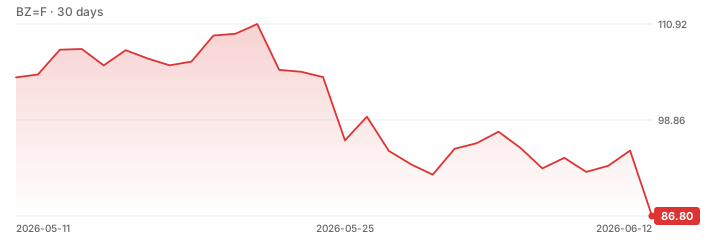
The drop was largely attributable to the ongoing fuel discount scheme, which has kept pump prices subdued, alongside a sharp decline in oil prices.
Food price increases also lost momentum, contributing to the broader softening of the headline figure.
These factors combined to pull the annual rate down, offering some relief to households and businesses grappling with cost-of-living pressures.
For markets, the data reinforces the narrative that inflation in the eurozone’s core economy is trending toward the European Central Bank’s 2% target.