Ghana’s ambitious infrastructure agenda faces a structural vulnerability as the country’s heavy reliance on extractive sector revenues to fund major projects leaves it exposed to global commodity price fluctuations.
The Public Interest and Accountability Committee (PIAC) has warned that the Kumasi-Accra Expressway project is particularly at risk due to the volatility of mineral revenues, which remain the primary funding source for such large-scale developments.
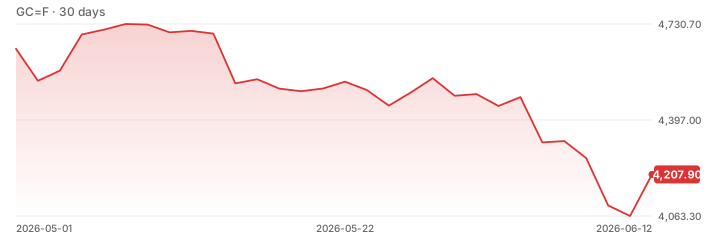
While mineral revenues, particularly from gold, have been relatively strong in recent periods, they remain subject to significant international price fluctuations.
This dependency creates a precarious fiscal environment where a downturn in global gold prices could directly jeopardize the completion or financing of critical infrastructure initiatives.
The PIAC report underscores the need for more diversified funding mechanisms to insulate national development goals from external market shocks.
The warning comes as Ghana continues to push forward with its infrastructure modernization plans, aiming to improve connectivity and economic efficiency across the country.
However, the structural link between state budgets and commodity exports means that fiscal stability is often tied to factors beyond domestic control.