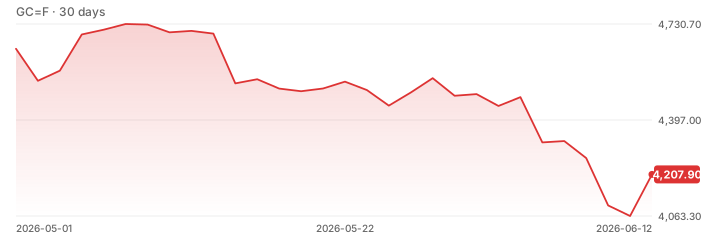
Spot gold prices stabilized around $4,010 an ounce on Monday, with the metal trading 0.3% lower at $4,006.02 in Singapore session trading.
The precious metal found a floor after the United States and Iran escalated military attacks over the weekend, creating a complex backdrop for investors.
The current consolidation near the $4,000 level suggests markets are digesting the dual risks of geopolitical supply shocks and monetary policy tightening.
Traders are now balancing the traditional safe-haven appeal of gold against growing concerns that geopolitical instability could fuel inflation, potentially forcing the Federal Reserve to raise interest rates rather than cut them.
This repricing marks a shift from the recent volatility that saw gold hit a one-week high of $4,063 on July 2, driven by weak jobs data and rate-cut expectations. Just days prior, on July 1, the metal had slipped to $3,974 as rising Treasury yields and a hawkish Fed outlook weighed on sentiment. The current consolidation near the $4,000 level suggests markets are digesting the dual risks of geopolitical supply shocks and monetary policy tightening.
The broader context remains fraught.
Gold is on track for its worst quarterly drop since 2013, pressured by the Fed’s hawkish stance. Additionally, the metal is facing its steepest monthly fall since 2008 as bets on rate hikes mount. The recent US-Iran clashes introduce a new variable: if energy prices spike due to shipping disruptions or supply fears, inflation could re-accelerate, undermining the case for rate cuts and pressuring non-yielding assets like gold.