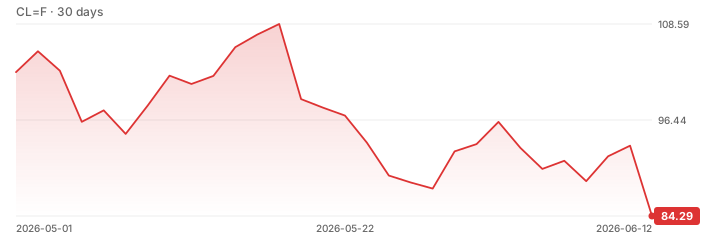
Gulf crude oil and condensate exports surged in early July, reaching levels significantly higher than the previous month's record highs, before renewed hostilities began to weigh on shipments.
Shipping analytics firm Vortexa estimated exports during the period at 13.06 million barrels per day, marking a substantial increase from the 10 million barrels per day recorded in June.
Earlier this month, Handelsavisen reported that the 14th South Korean tanker cleared the Red Sea, signaling a temporary easing of logistical bottlenecks.
The initial spike followed a deal to reopen the Strait of Hormuz, which had previously constrained regional throughput.
However, the latest data indicates that export volumes are now slowing as geopolitical tensions escalate once more.
This reversal underscores the fragility of the supply recovery and the sensitivity of Gulf flows to regional security dynamics.
The volatility in export volumes comes after a period of stabilization in global shipping routes.
Earlier this month, Handelsavisen reported that the 14th South Korean tanker cleared the Red Sea, signaling a temporary easing of logistical bottlenecks. The current slowdown in Gulf exports suggests that while some routes have stabilized, the Strait of Hormuz remains a critical chokepoint where political developments can rapidly alter supply availability.