The Gulf Cooperation Council economies are demonstrating resilience against the backdrop of sustained high interest rates in the United States, according to analysis from Asharq Al-Awsat.
The region’s ability to absorb the impact of the Federal Reserve’s decision to keep borrowing costs elevated is underpinned by robust government balance sheets and favorable energy market dynamics.
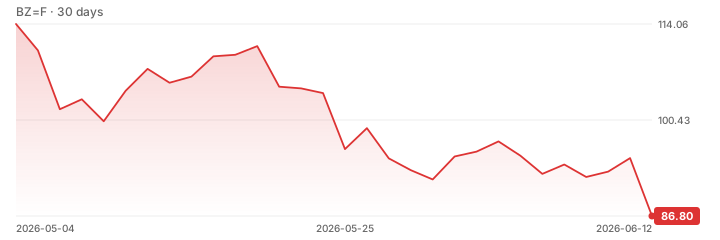
Higher oil prices have played a critical role in strengthening fiscal positions across the Gulf, providing a natural hedge against the external pressure of a strong dollar and expensive credit.
This energy-driven revenue stream has allowed governments to maintain spending levels and manage debt servicing costs more effectively than in previous cycles of monetary tightening.
The stability of these economies comes at a time when financial conditions in the region have been tightening.
Recent assessments have highlighted how resurgent inflationary pressures and geopolitical instability have contributed to a more challenging macroeconomic environment.