Oil-producing nations in the Gulf are accelerating plans for alternative export routes, with a series of pipeline projects announced or revived in response to persistent disruptions in the Strait of Hormuz.
The move marks a strategic pivot by major exporters seeking to insulate their revenue streams from geopolitical volatility in one of the world's most critical maritime chokepoints.
While flows have surged to 10 million barrels a day as shipping resumed, the underlying security environment remains fragile, prompting producers to look beyond maritime transit for long-term stability.
The push for infrastructure diversification comes as shipping through the strait remains exposed to risk, following recent escalations that have kept tanker routes under pressure.
While flows have surged to 10 million barrels a day as shipping resumed, the underlying security environment remains fragile, prompting producers to look beyond maritime transit for long-term stability.
This infrastructure push aligns with broader concerns that the Strait of Hormuz may not return to pre-conflict export levels.
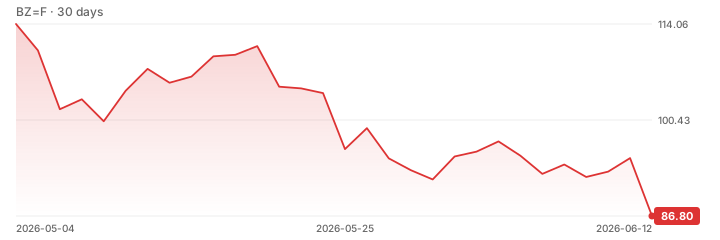
Shipowners are increasingly factoring in the risk of renewed conflict, which has already driven Brent crude higher as diplomatic efforts to secure a lasting ceasefire have stalled. The acceleration of pipeline projects suggests that Gulf states are preparing for a prolonged period of elevated shipping risk.
The development underscores a structural shift in global energy logistics.