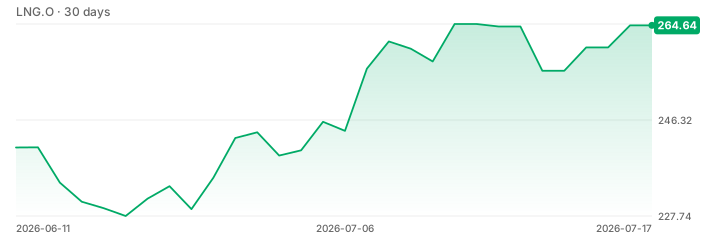
The geopolitical standoff in the Strait of Hormuz has intensified, with recent drone attacks on vessels near Qatar’s coastline marking a significant escalation in regional tensions.
This development challenges the prevailing market view that the risk to global shipping lanes was temporary and manageable.
Instead, energy corridors and supply chains are now being assessed as structural vulnerabilities that bend under pressure and recover imperfectly, accumulating systemic risk over time.
Brent crude and liquefied natural gas (LNG) prices are reflecting this shift in risk perception.
The attacks on commercial shipping underscore the fragility of critical energy infrastructure, prompting traders to price in a higher premium for supply disruption.
As multiple Gulf nations monitor the situation, the focus has moved from isolated incidents to a broader pattern of instability that threatens the reliability of key maritime routes.