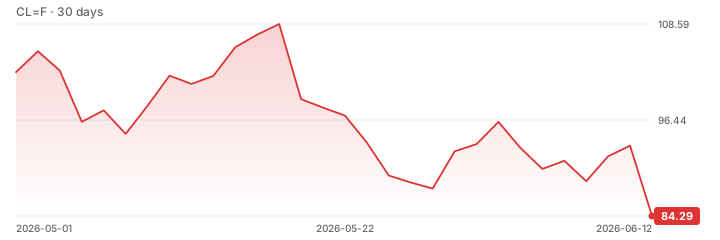
Geopolitical tensions in the Middle East remain a persistent drag on global shipping routes, with Houthi forces continuing to target commercial vessels despite diplomatic efforts to de-escalate the conflict. U.S. President Donald Trump has publicly expressed dissatisfaction with Iran’s latest peace proposal, signaling that Washington is not ready to accept the current terms to end the two-month-old confrontation involving the United States and Israel.
This diplomatic stalemate reinforces the perception that military and naval risks in the Red Sea and Gulf of Aden will persist, keeping a risk premium embedded in energy markets.
5% to settle at $92.64 a barrel—the underlying geopolitical risk remains unresolved.
The ongoing threat to maritime trade routes has direct implications for crude oil pricing and supply chain stability.
While crude markets recently reversed an upward trajectory—with West Texas Intermediate futures sliding 3.5% to settle at $92.64 a barrel—the underlying geopolitical risk remains unresolved.
The Houthi group’s continued interference with commercial shipping, including attacks on tankers, serves as a constant reminder of the vulnerability of key energy transit corridors.
This dynamic prevents a full normalization of oil prices, as traders price in the potential for sudden supply disruptions.