Iran’s Islamic Revolutionary Guard Corps (IRGC) claimed on Wednesday that it had targeted facilities belonging to the US Fifth Fleet in Bahrain, marking a significant escalation in regional hostilities.
The group simultaneously warned that it could close key energy export routes in response to further US military actions, reigniting fears of a supply disruption in the Strait of Hormuz.
Handelsavisen previously noted that Citi analysts had projected Brent crude could fall to $60 as the Hormuz risk premium unwound, a thesis that now faces immediate headwinds.
The claim comes amid heightened alert levels in the Gulf, with warning sirens reported across Bahrain early Thursday and eyewitnesses describing missile interceptions over the kingdom.
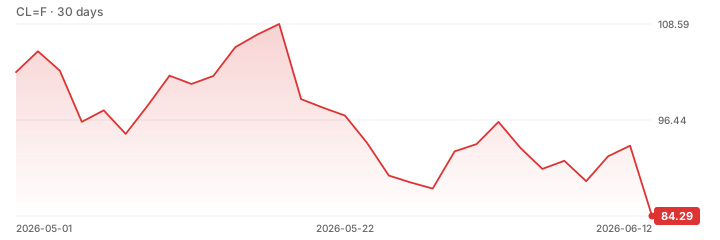
This development sharply contrasts with the recent market narrative, which had seen oil prices slide to multi-month lows as traders priced in a de-escalation following US-Iran peace talks. The sudden shift in rhetoric threatens to unwind the risk premium that had been fading from energy markets.
Handelsavisen previously noted that Citi analysts had projected Brent crude could fall to $60 as the Hormuz risk premium unwound, a thesis that now faces immediate headwinds. The IRGC’s specific threat to target energy infrastructure and chokepoints introduces a new layer of uncertainty for shipping insurers and energy traders, who had begun to normalize risk assessments following the resumption of Iranian exports.
Markets are likely to reassess the probability of a physical disruption to Gulf oil flows, which account for a significant share of global seaborne trade.
The credibility of the IRGC’s threat, combined with the reported strikes on US naval assets, suggests that the geopolitical risk premium may return to Brent and WTI prices in the coming sessions.