Iran’s recent military strikes on Bahrain, Kuwait, Qatar, and other Gulf Cooperation Council (GCC) members have fundamentally altered the security landscape in the Middle East, blurring the lines between Israel’s confrontation with Tehran and the threats facing the wider region.
An editorial in The Jerusalem Post argues that these actions demonstrate Iran’s willingness to target nations not formally at war with it, underscoring the need for Israel and Gulf states to establish a permanent regional defense alliance.
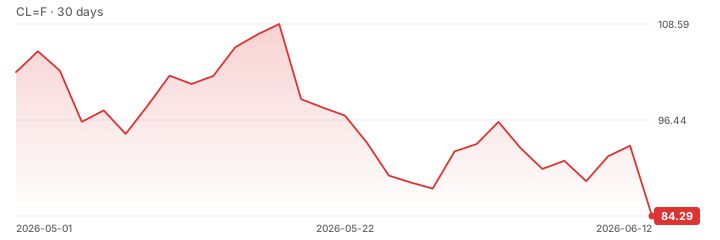
Although crude oil prices have seen volatility, with Brent slipping below $72 earlier in the week as diplomatic progress briefly eased supply fears, the latest strikes reintroduce significant uncertainty.
This perspective gains traction as GCC members and Jordan issued a joint condemnation of the repeated attacks, describing the assaults as a direct threat to regional stability.
The escalation has intensified fears of supply chain disruptions in the Strait of Hormuz, a critical chokepoint for global oil shipments.
While diplomatic efforts continue, including recent meetings between US envoys and Qatar in Doha aimed at pushing Iran toward a nuclear deal, the prospect of direct military action by Gulf states against Iran is gaining momentum among analysts. The coalition’s unified stance suggests that regional patience is being severely tested by continued attacks on shipping and sovereign territory.
Markets are closely monitoring the situation for signs of further disruption to energy flows.
Although crude oil prices have seen volatility, with Brent slipping below $72 earlier in the week as diplomatic progress briefly eased supply fears, the latest strikes reintroduce significant uncertainty. Investors are now weighing the risk of prolonged shipping disruptions against the potential for a coordinated regional response that could stabilize the situation.
The call for a permanent defense alliance reflects a growing recognition that ad-hoc responses are insufficient to counter Iran’s asymmetric tactics.