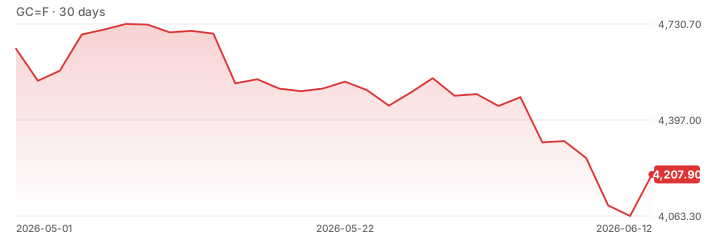
Iran’s Islamic Revolutionary Guard Corps (IRGC) has declared that the Strait of Hormuz will remain closed to maritime traffic until the United States ceases what it describes as "acts of aggression." The statement, issued Wednesday, marks a hardening of Tehran’s position on the critical chokepoint, which handles roughly a fifth of the world’s oil supply.
The IRGC also warned that other regional oil export routes could become targets if pressure persists, signaling a potential broadening of the disruption beyond the Strait itself.
This escalation follows earlier declarations by the IRGC Navy that the waterway was closed to all traffic, a move that has already triggered significant repricing in energy and shipping markets.
The threat to alternative routes introduces a new layer of complexity for traders and insurers.
While the Strait of Hormuz is the primary artery for Gulf crude, Iran’s suggestion that it could target secondary corridors implies a strategy of sustained supply chain friction rather than a temporary blockade.
This could lead to prolonged volatility in freight rates and insurance premiums for vessels operating in the Persian Gulf and surrounding waters.