Iraq’s federal budget execution data reveals that oil revenues constituted 84% of the country’s total federal income through the end of May 2026.
The government collected 33.747 trillion Iraqi dinars, equivalent to approximately $25.65 billion, during the five-month period, according to figures cited by Shafaq News.
The concentration of revenue in the energy sector highlights the persistent structural risks facing Baghdad’s fiscal planning.
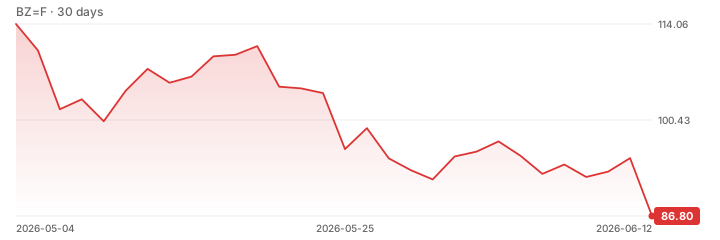
With nearly nine out of every ten dinars of federal income derived from crude exports, the Iraqi state remains highly exposed to external shocks, including fluctuations in Brent crude prices and geopolitical disruptions in the Persian Gulf.
Any sustained dip in global oil demand or supply chain interruptions could severely constrain the government’s ability to fund public sector wages and subsidies, which dominate expenditure.
This heavy reliance on hydrocarbons comes as Iraq navigates a complex export landscape.