Fuel prices in Kosovo have risen for a second consecutive period, with the cost of derivatives increasing by two cents per liter compared to the previous Sunday.
The adjustment, based on maximum prices published by the Ministry of Trade and Entrepreneurship, underscores the persistent pressure on local energy costs despite a cooling trend in global crude markets.
2% year-on-year in June, marking the second consecutive month that inflation has exceeded the 3% threshold.
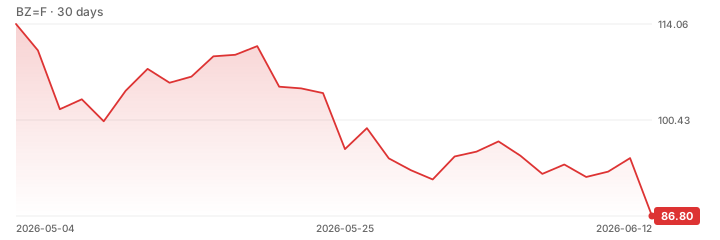
The local price hike stands in contrast to recent developments in international oil markets, where Brent crude has retreated to pre-war lows as shipping risks in the Strait of Hormuz have normalized. This divergence highlights the lagged nature of retail fuel pricing, which often continues to reflect earlier global benchmarks even as spot prices stabilize.
The increase in fuel costs in Kosovo adds to a broader pattern of inflationary pressure seen in other regions where energy prices have spiked.
Similar dynamics were observed in Pakistan, where rising fuel rates led to sharp increases in the prices of essential food items such as flour and vegetables, as higher energy costs directly impacted transportation and logistics.
Meanwhile, global inflation concerns remain elevated, with South Korea’s consumer price index rising 3.2% year-on-year in June, marking the second consecutive month that inflation has exceeded the 3% threshold.
These developments suggest that while global crude prices may be stabilizing, the downstream effects on consumer prices and local economies continue to unfold.