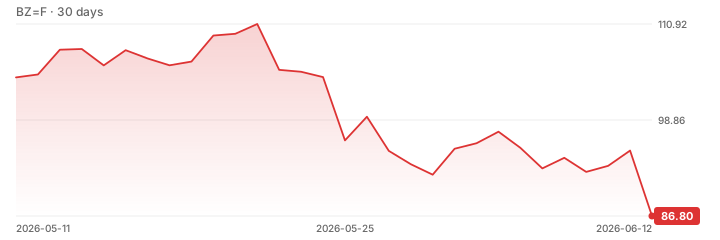
Energy inflation across Latin America accelerated sharply in the year to May, rising 6.41 percent and tripling the pace recorded just two months prior.
The surge in fuel and power costs stands in stark contrast to headline inflation, which remained largely unchanged, creating a widening gap that complicates monetary policy decisions for regional central banks.
The acceleration in energy prices reflects persistent volatility in global commodity markets, with Brent crude and natural gas prices exerting upward pressure on local fuel tariffs and electricity generation costs.
While headline inflation has stabilized in several major economies, the underlying energy component is moving in the opposite direction, suggesting that the disinflationary trend may be losing momentum in key sectors.
This divergence poses a significant challenge for policymakers in the region.
Central banks in countries such as Brazil, Mexico, and Colombia have been navigating a delicate balance between supporting economic growth and containing inflation.