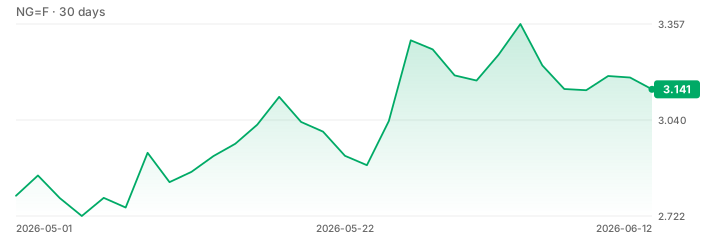
The global liquefied natural gas (LNG) market is poised for a near-term recovery in 2026, yet long-term supply security through 2050 remains highly uncertain due to persistent geopolitical instability.
While US LNG exports to 43 countries are projected to reach 120 million tonnes per year this year, generating over $60 billion in annual revenue, the structural outlook is clouded by risks in critical trade routes.
Shell has previously warned of a potential structural deficit in global LNG supplies in the coming years, citing geopolitical instability as a primary driver.
This divergence between short-term volume growth and long-term fragility underscores the market's sensitivity to shipping disruptions.
Recent volatility in energy prices has been driven by concerns over the Strait of Hormuz, where tensions have periodically forced major players like Qatar Energy to recall tankers.
Such incidents highlight how quickly supply chains can be disrupted, even as overall export volumes rise.
Shell has previously warned of a potential structural deficit in global LNG supplies in the coming years, citing geopolitical instability as a primary driver.