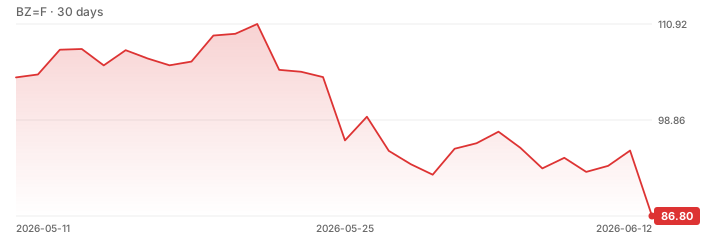
Malaysia’s monthly fuel subsidy expenditure is projected to remain near RM3.5 billion, even as global Brent crude prices have settled within the US$70 to US$90 per barrel range.
The persistence of this fiscal burden highlights the disconnect between moderating international energy benchmarks and domestic policy commitments in Southeast Asia.
The figure underscores the structural rigidity of Malaysia’s subsidy framework, which continues to absorb significant fiscal resources despite a more benign global pricing environment.
Finance Minister II Datuk Seri Amir Hamzah Azizan has indicated that the government is actively engaging with major oil companies to address financial losses incurred by petrol station operators, suggesting that the current subsidy model is placing strain on downstream margins.
This development adds to a broader narrative of elevated fuel costs persisting in various markets despite crude oil prices returning to pre-conflict levels.
In the UK, for instance, motorists have faced prolonged periods of high pump prices, illustrating how domestic policy and market structures can decouple local fuel costs from global commodity trends.