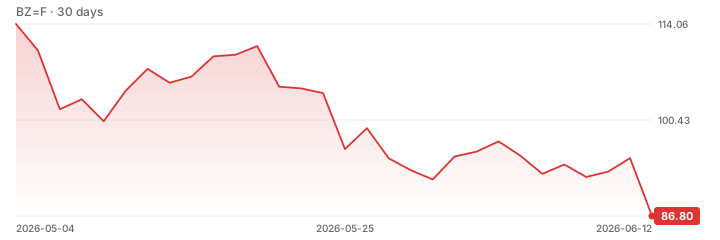
The ongoing conflict in the Middle East has intensified forecasts of a global oil deficit for 2026, according to a Reuters poll of analysts.
However, the market outlook for 2027 remains skewed toward oversupply, driven by recovering Gulf flows, strong U.S. production, and weakening demand from China.
The divergence between the two years highlights the complex interplay between geopolitical risk premiums and fundamental supply-demand dynamics.
While the immediate threat to Middle Eastern supply routes keeps the 2026 balance sheet tight, the longer-term trajectory is being shaped by structural factors that favor excess capacity.
U.S. shale producers continue to ramp up output, providing a buffer against Middle Eastern disruptions.
Simultaneously, China’s economic slowdown is dampening global demand growth, a key variable that could tip the scales back toward a glut once geopolitical tensions ease or Gulf production fully recovers.
This dual narrative creates a volatile trading environment.