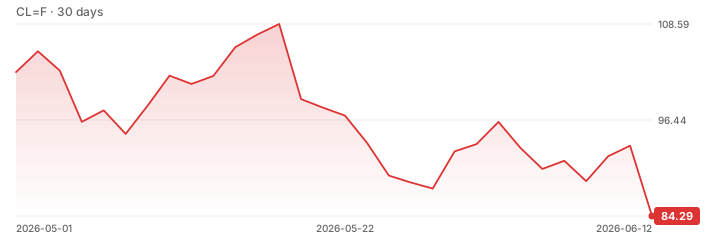
Global oil prices climbed to fresh one-month highs on Monday, driven by the reescalation of military attacks between the United States and Iran.
The surge in crude benchmarks has rippled through emerging-market currencies, with the Philippine peso weakening to P61.686 per dollar as investors priced in higher import costs and geopolitical uncertainty.
This marks a continuation of the pressure on EM assets that began earlier in the week, following a sharp depreciation of the peso to P61.71 on Tuesday.
The cross-asset reaction underscores the market’s sensitivity to Middle East supply risks.
As crude prices rise, import-dependent economies face immediate balance-of-payments headwinds, prompting central banks to monitor currency volatility closely.
The Mexican peso, by contrast, showed slight resilience earlier in the week as traders assessed the immediate impact of the renewed tensions. However, the broader trend points to a risk-off environment where energy exporters may benefit while net importers struggle with inflationary pressures.
This development follows a period of heightened volatility in Asian equities, which recently stabilized after a tech-led rout. The current oil price spike adds a new layer of complexity to the recovery narrative, as higher energy costs could dampen consumer spending and corporate margins in key growth markets.