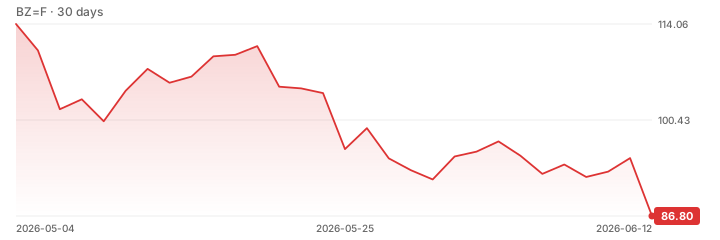
Brent crude futures dropped more than $1 per barrel on Tuesday, continuing a steep decline that has seen energy prices retreat from recent highs.
The selloff reflects growing market confidence that a peace agreement between the United States and Iran is nearing finalization, which would significantly reduce the geopolitical risk premium currently embedded in oil prices.
This development builds on a series of recent declines, including a slide below $71 earlier in July as US-Iran talks advanced and Hormuz flows eased supply fears.
The decline marks a continuation of the repricing trend that began earlier in the week, as traders increasingly bet on the normalization of shipping routes through the Strait of Hormuz.
This follows a period of intense volatility where supply fears drove prices higher, but optimism over diplomatic progress has since taken hold.
The move underscores how quickly sentiment can shift when geopolitical tensions appear to de-escalate, with the risk premium unwinding faster than fundamental supply deficits can be addressed.
This development builds on a series of recent declines, including a slide below $71 earlier in July as US-Iran talks advanced and Hormuz flows eased supply fears. The market has been closely watching for signs of a breakthrough, with previous reports indicating that a potential agreement could significantly alter global energy flows. The current drop suggests that investors are now pricing in a higher probability of a successful resolution, reducing the need for a buffer against potential supply disruptions.