Oman has formally presented a proposal to the United States and other Western nations that would require shipping companies to pay service fees for transiting the Strait of Hormuz.
The plan, developed in coordination with regional partners, points to the straits of Malacca and Singapore as a possible blueprint for the new fee structure.
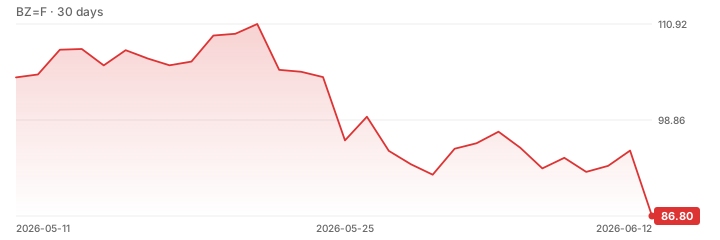
Brent crude fell 1% earlier in the session as Iran-US talks eased Strait of Hormuz supply fears, but the introduction of a formal fee structure could reintroduce uncertainty into energy markets.
The proposal comes as Iran is reportedly planning to charge vessels billions of dollars annually in transit fees to reopen the Strait of Hormuz, a move that could fundamentally alter the economics of global energy trade.
The Strait of Hormuz remains a critical chokepoint for global oil and gas flows, and any new fee structure would directly impact shipping costs and energy prices.
Brent crude fell 1% earlier in the session as Iran-US talks eased Strait of Hormuz supply fears, but the introduction of a formal fee structure could reintroduce uncertainty into energy markets.
Shipping unions have maintained warzone status for the Strait of Hormuz amid persistent vessel attacks, highlighting the ongoing security risks in the region.