The State Bank of Pakistan is widely expected to keep its policy interest rate unchanged at its monetary policy committee meeting on Monday, July 27.
Analysts indicate that policymakers are prioritising financial stability over growth stimulation, a stance reinforced by escalating tensions in the Gulf region.
The decision reflects a cautious approach to monetary policy as external risks mount.
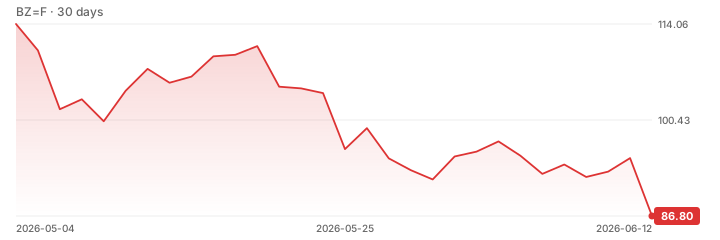
Renewed military activity in the Middle East threatens to disrupt energy supplies, complicating the inflation outlook for emerging markets like Pakistan.
With import costs potentially rising due to shipping disruptions, the central bank faces pressure to maintain a buffer against imported inflation rather than cutting rates to support domestic demand.
This pause aligns with a broader trend of central banks holding steady amid geopolitical uncertainty.