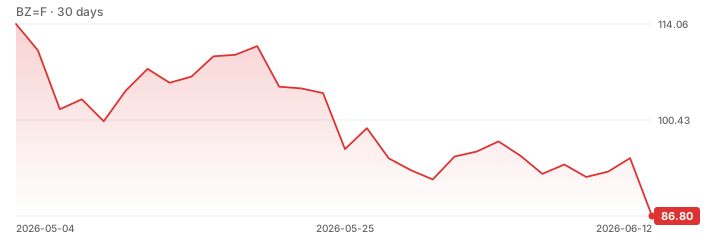
The Reserve Bank of India (RBI) intervened heavily in foreign-exchange markets in May, selling a net $6.1 billion to prop up the rupee as it faced record lows driven by surging global oil prices.
Monthly data released by the central bank shows it purchased $22.2 billion and sold $28.3 billion during the month, marking a significant escalation from the net $8.9 billion in sales recorded in April.
25% in its recent policy meeting further signals a prioritization of currency stability over domestic growth stimulation.
The intervention underscores the mounting pressure on India’s currency amid a deteriorating terms-of-trade environment.
As crude prices climb, India’s import bill swells, widening the current-account deficit and forcing the RBI to burn through foreign reserves to prevent disorderly depreciation.
The central bank’s decision to keep its benchmark interest rate unchanged at 5.25% in its recent policy meeting further signals a prioritization of currency stability over domestic growth stimulation.
This aggressive defense of the rupee reflects a broader challenge for emerging-market central banks navigating the intersection of energy shocks and monetary policy.