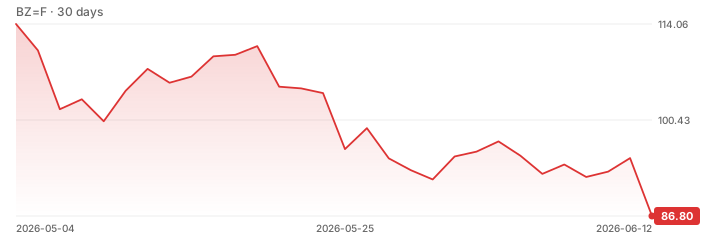
The Monetary Authority of Singapore (MAS) tightened its monetary policy stance on Monday, marking a second consecutive adjustment aimed at countering the inflationary pressure from a renewed surge in global oil prices.
The central bank’s decision reflects a preemptive strategy to manage medium-term price stability through the Singapore dollar exchange rate, even as domestic inflation remains relatively contained.
6% in June from 1.4% in May, driven by rising costs for food, retail goods, and services, the MAS is acting ahead of potential further price increases linked to geopolitical tensions in the Middle East.
This policy shift underscores the growing influence of energy markets on monetary decisions in open economies.
While Singapore’s core inflation rate accelerated to 1.6% in June from 1.4% in May, driven by rising costs for food, retail goods, and services, the MAS is acting ahead of potential further price increases linked to geopolitical tensions in the Middle East.
The central bank’s approach highlights the vulnerability of trade-dependent economies to external supply shocks.
The tightening comes amid broader concerns about the transmission of higher energy costs to consumer prices.