South Korea’s crude oil supply chain remains intact despite renewed geopolitical friction in the Middle East, the country’s industry ministry confirmed Tuesday.
The government stated it is closely monitoring major shipping routes to ensure continuity, signaling that current tensions have not yet translated into physical bottlenecks for one of the world’s largest oil importers.
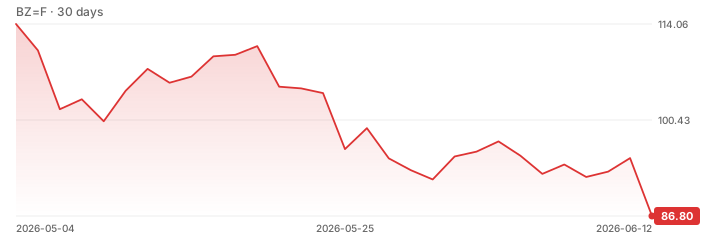
Brent crude has retreated from recent highs, sliding below $71 earlier this week as diplomatic talks between the US and Iran eased fears of a Strait of Hormuz blockade.
The assurance comes as global energy markets digest a complex mix of de-escalation and persistent risk.
Brent crude has retreated from recent highs, sliding below $71 earlier this week as diplomatic talks between the US and Iran eased fears of a Strait of Hormuz blockade. However, the benchmark has held near one-month highs in the latest session, supported by lingering concerns over Red Sea shipping security and potential blockade threats from Yemen.
Seoul’s stance aligns with a broader shift in regional risk perception.
The South Korean government recently downgraded its national resource security crisis warning for crude oil from Level 3 to Level 2, a move that underscored a tangible reduction in perceived supply vulnerability. This administrative downgrade suggests that while geopolitical headlines remain volatile, the operational reality for key Asian importers has stabilized.
For traders, the divergence between headline risk and physical flow stability is critical.