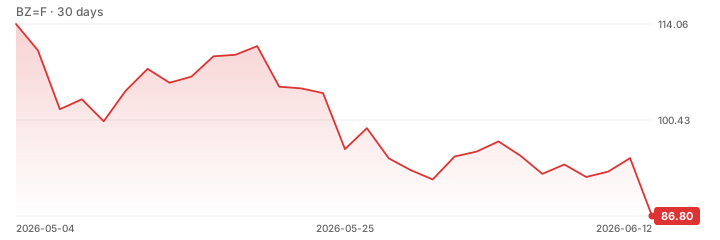
The Strait of Hormuz has been shuttered once more following a fresh round of missile strikes exchanged between the United States and Iran, effectively ending hopes for an extended ceasefire in the region.
The direct military confrontation marks a sharp reversal from the diplomatic de-escalation that had characterized the corridor in recent weeks, leaving global energy flows exposed to immediate disruption risk.
This latest flare-up contrasts with the market sentiment just days prior, when Brent crude had slid below $71 as US-Iran talks and Hormuz flows eased supply fears.
Oil prices climbed sharply as the Strait of Hormuz remained closed following President Donald Trump's rejection of Iran's latest ceasefire proposal.
The development has heightened concerns over a potential escalation in the Middle East, with traders quickly repricing the risk of sustained supply interruptions through the narrow waterway that handles roughly a fifth of global oil consumption.
This latest flare-up contrasts with the market sentiment just days prior, when Brent crude had slid below $71 as US-Iran talks and Hormuz flows eased supply fears.
The rapid shift underscores how fragile the recent calm was, with investors now facing a renewed premium on shipping risk and geopolitical pressure on trade routes.