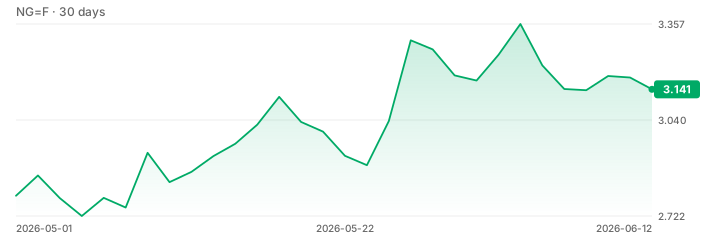
Disruptions to liquefied natural gas (LNG) shipments through the Strait of Hormuz are rippling through global energy markets, driving up electricity costs for consumers and businesses across multiple regions.
The supply bottleneck has intensified pressure on gas prices, which are now being passed through to power generators and end-users.
The International Energy Agency (IEA) highlighted the widening impact in its mid-year outlook, noting that the volatility in LNG transport is directly affecting electricity markets.
As gas serves as a critical input for power generation in many economies, the surge in feedstock costs is translating into higher retail electricity rates.
Singapore has seen electricity costs climb to record highs, driven by the severe supply shock stemming from the Strait of Hormuz disruptions.
The spike in power prices is directly linked to elevated energy input costs, leaving the city-state particularly exposed to global LNG market dynamics.