A small island off the coast of Singapore has solidified its position as the primary hub for Russian oil destined for Asian markets, according to a Bloomberg analysis.
The facility has become a critical node in the complex web of shipping and trading that has evolved to circumvent Western sanctions on Russian energy exports.
This concentration of flow underscores how Asian buyers have adapted to the new reality of sanctioned crude, relying on localized infrastructure to blend, store, and redistribute the commodity.
The development comes as global energy markets continue to navigate a landscape defined by geopolitical fragmentation.
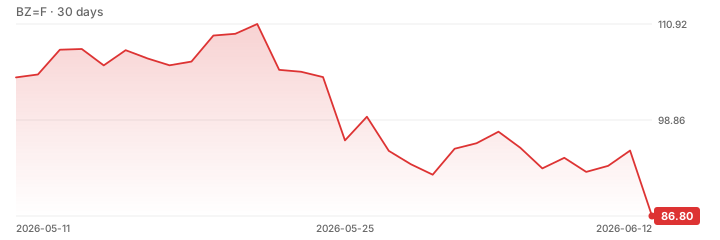
While Brent crude prices have recently stabilized near pre-conflict levels as the immediate risk premium from Middle Eastern tensions faded, the underlying supply chains remain heavily influenced by political alignments.
The rise of this Singaporean hub reflects a broader trend where traditional trading centers are being supplemented or replaced by specialized nodes that can handle the specific logistical and financial requirements of sanctioned oil.