US President Donald Trump has declared that the United States will maintain control over the Strait of Hormuz and should be reimbursed for securing the vital shipping corridor.
The remarks, made during a media interview, signal a potential shift in how the US frames its security role in the region, moving beyond traditional naval protection to a more explicit assertion of operational authority and financial compensation.
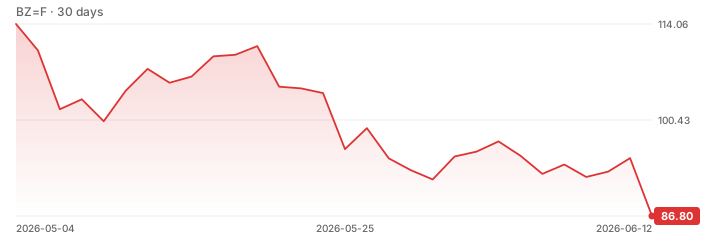
Brent crude surged 3% earlier in the session as traders assessed the escalating transit risk in the chokepoint, which handles roughly a fifth of the world's oil supply.
The statement comes as global markets continue to price in elevated shipping risks following recent military strikes between the US and Iran.
Brent crude surged 3% earlier in the session as traders assessed the escalating transit risk in the chokepoint, which handles roughly a fifth of the world's oil supply. The prospect of formalized US control, coupled with demands for reimbursement, introduces new variables for shipping insurers, freight forwarders, and energy traders who rely on predictable passage through the strait.
This development follows a series of stalled diplomatic efforts in Doha, where US-Iran talks failed to resolve underlying tensions, leaving the risk premium intact. Previous reports indicated that the Strait of Hormuz remained a flashpoint despite preliminary peace deals, with shipping companies already adjusting routes and premiums to account for potential disruptions. Trump's latest comments suggest that the US may be preparing for a more prolonged and structured presence in the region, rather than relying on ad-hoc security measures.
For market participants, the key question is how this assertion of control will translate into operational reality.