United Airlines reported second-quarter earnings that exceeded Wall Street expectations, driven by strong demand across premium, corporate, and basic economy segments.
However, the carrier highlighted that approximately $6 billion in additional fuel costs continued to pressure profitability, a direct consequence of ongoing geopolitical tensions in the Middle East disrupting global shipping routes.
European carrier Lufthansa recently reported nearly $2 billion in extra fuel expenses for the first quarter alone, citing the same Middle East conflict as the primary driver.
The results underscore the dual reality facing major US carriers: robust travel demand is offset by volatile input costs.
United noted revenue growth in both domestic and international trips, indicating that passengers are willing to pay higher fares despite the economic headwinds.
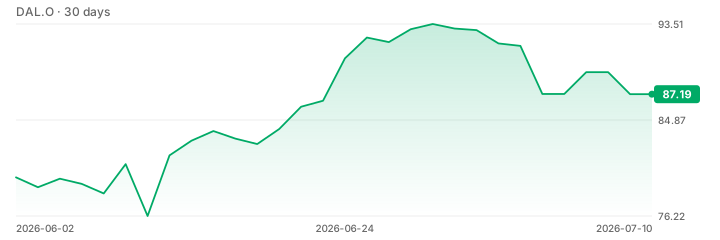
This mirrors trends seen at rival Delta Air Lines, which is also navigating similar cost structures ahead of its own Q2 report this week.
The fuel cost burden is not unique to United.
European carrier Lufthansa recently reported nearly $2 billion in extra fuel expenses for the first quarter alone, citing the same Middle East conflict as the primary driver.