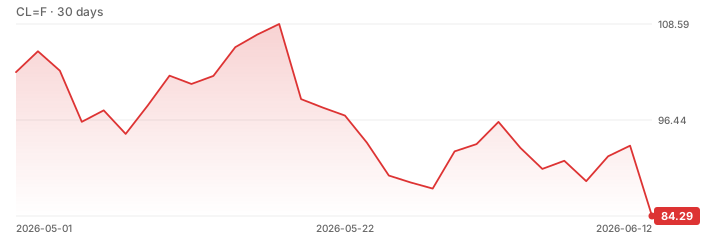
The United States is actively supporting efforts by Iraq and Syria to revive a crude oil pipeline connecting the two nations, a move that could significantly reduce Iran's leverage over global energy supplies by offering an alternative to the Strait of Hormuz.
A State Department official confirmed the diplomatic backing, signaling a strategic shift toward diversifying Middle Eastern export infrastructure away from the contested waterway.
Bloomberg reported that Chevron could play a role in rebuilding the pipeline, though the company declined to comment on the potential involvement.
Bloomberg reported that Chevron could play a role in rebuilding the pipeline, though the company declined to comment on the potential involvement.
This development arrives as markets continue to price in elevated geopolitical risk premiums following Iran's recent warnings to oil tankers regarding approved routes in the Strait of Hormuz.
The prospect of a functional Iraq-Syria pipeline introduces a tangible supply-side hedge, potentially limiting the severity of any future supply shocks stemming from Hormuz closures or sanctions.
While the pipeline's immediate impact on global barrels is limited, its strategic value lies in reducing the region's dependency on a single chokepoint.