The United States military confirmed early Saturday that it has concluded a seventh consecutive night of airstrikes against Iran, marking a significant intensification of the ongoing conflict. U.S. Central Command stated that the operation continues to enforce a naval blockade, targeting infrastructure linked to missile and drone capabilities.
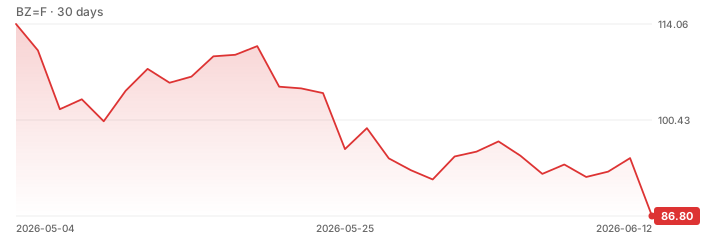
This development follows a period of relative de-escalation in early July, when diplomatic talks and eased supply fears had driven oil prices to multi-month lows.
Citi had recently projected Brent crude could fall to $60 as Hormuz risks subsided, a forecast that now faces immediate headwinds.
Simultaneously, Kuwait and Bahrain reported intercepting additional Iranian projectiles, signaling that the conflict is actively disrupting regional airspace and maritime security.
Commercial shipping in the Gulf continues to face operational disruptions, with tanker routes exposed to heightened risk.
The direct threat to transit corridors undermines the recent recovery in Hormuz traffic, which had previously alleviated supply concerns for global energy markets.
The renewed violence contrasts sharply with the market sentiment from just weeks ago, when traders were pricing in a potential unwind of the geopolitical risk premium.
Citi had recently projected Brent crude could fall to $60 as Hormuz risks subsided, a forecast that now faces immediate headwinds. The current escalation suggests that the risk premium is not only returning but potentially expanding as insurers and shipping companies reassess the safety of Gulf transit.
For traders, the key implication is a likely repricing of energy and freight assets.