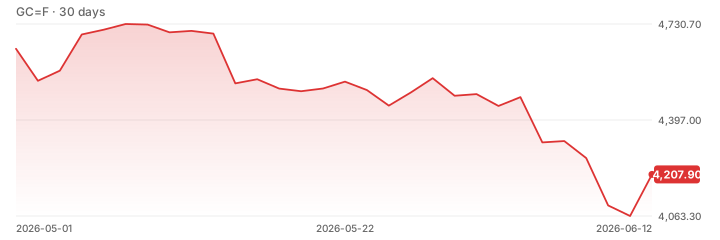
U.S. consumer inflation is expected to have slowed in June, driven largely by a retreat in gasoline prices following a temporary de-escalation of tensions in the Middle East.
However, the cooling headline figure is unlikely to provide significant relief to households or eliminate the possibility of a Federal Reserve interest rate increase later this year.
The moderation in energy costs came as a fragile ceasefire took hold in the region, allowing fuel prices to reverse their earlier upward trajectory.
Despite this dip in input costs, the broader inflationary picture remains complex.
A recent survey by the Federal Reserve Bank of New York indicated that U.S. consumers actually increased their near-term inflation expectations in June, even as energy costs moderated.
This divergence between falling energy prices and rising consumer sentiment suggests that underlying price pressures may remain sticky.