The White House is preparing to impose new tariffs on approximately 60 trading partners, citing alleged failures to combat forced labor.
The move represents a strategic pivot for the Trump administration, which is seeking to rebuild its trade agenda following a recent setback at the Supreme Court.
By leveraging human-rights provisions rather than traditional national-security or trade-deficit arguments, the administration aims to circumvent legal challenges that have stalled previous tariff initiatives.
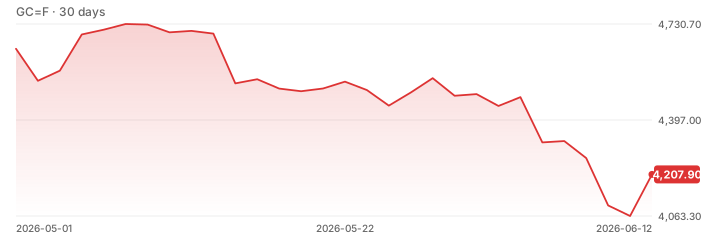
Markets are reacting to the prospect of a broader trade conflict, with investors bracing for potential disruptions to global supply chains.
The shift in legal justification raises questions about the durability of the new measures, but the sheer scale of the proposed tariffs—targeting dozens of nations—suggests a significant escalation in trade tensions.
Equity markets are likely to face headwinds as companies reassess their exposure to US import duties, particularly in sectors reliant on global manufacturing networks.