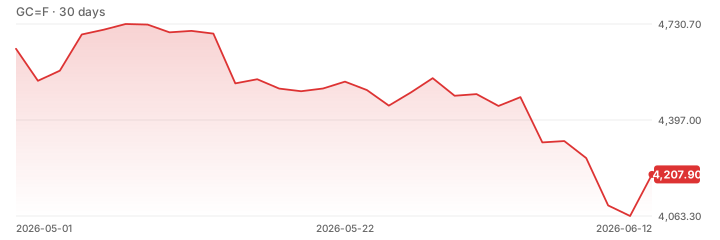
Wall Street analysts are maintaining their forecasts for a Federal Reserve rate increase in 2026, despite June data showing a brief period of deflation in the US economy.
The persistence of this hawkish outlook underscores the market's focus on underlying inflationary pressures rather than the headline price drop, which many view as a temporary anomaly.
His comments have added weight to the view that the Fed remains committed to ensuring price stability, even if short-term data suggests cooling pressures.
The incoming Federal Reserve Chair, Kevin Warsh, has reinforced this cautious stance by stating that the central bank will not tolerate high inflation levels.
His comments have added weight to the view that the Fed remains committed to ensuring price stability, even if short-term data suggests cooling pressures.
This hawkish signal from the top of the central bank hierarchy is a key driver behind the market's reluctance to price in further easing.
Analysts point to external risks as a primary reason for the continued rate hike expectations.