Brazil’s federal government has spent R$7 billion on diesel subsidies since the resumption of conflict in Iran, according to data from the National Agency of Petroleum, Natural Gas and Biofuels (ANP).
The figure marks a sharp acceleration from the R$4.7 billion recorded earlier in 2026, highlighting the mounting fiscal pressure on state-controlled oil major Petrobras as it absorbs the difference between international crude prices and domestic retail caps.
The subsidy program, which was extended following the escalation in the Middle East, is funded through an export tax on crude oil introduced in March.
This mechanism effectively forces Petrobras to finance the price gap, diverting cash flow that would otherwise support dividends, debt reduction, or capital expenditure.
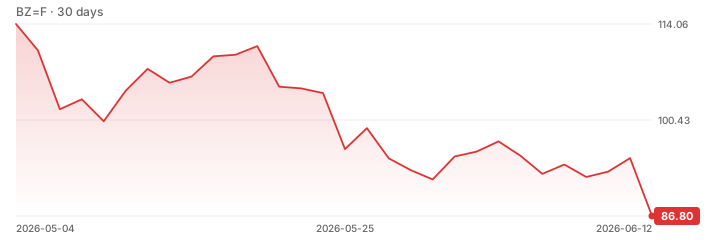
With Brent crude remaining volatile due to shipping risks in the Strait of Hormuz, the cost of maintaining stable domestic fuel prices continues to rise.
The financial strain on Petrobras comes as the company faces broader fiscal headwinds.