The US Central Command (CENTCOM) has confirmed that 35 commercial vessels have been rerouted in the Strait of Hormuz region, marking a significant escalation in the operational disruption caused by an Iranian naval blockade.
The figure represents a sharp increase from earlier reports of eight and then 12 redirected ships, indicating that the chokepoint is becoming increasingly untenable for standard transit schedules.
The surge in rerouted traffic underscores the growing severity of the shipping risk in one of the world's most critical energy corridors.
With a substantial portion of global seaborne oil trade passing through the Strait, the blockade forces carriers to seek longer, more expensive alternatives or delay voyages entirely.
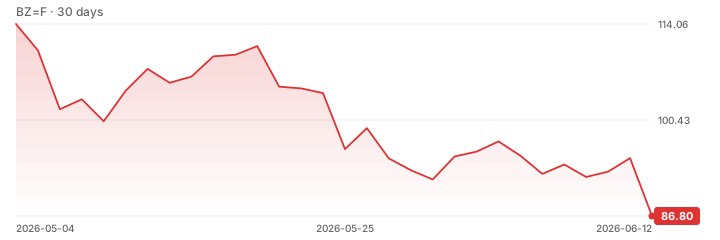
This operational friction directly supports the risk premium embedded in energy markets, as traders price in the likelihood of sustained supply constraints.
Brent crude prices have remained elevated as the rerouting data confirms that the disruption is not a temporary anomaly but a structural shift in regional logistics.