Iran has issued a direct threat to target US warships that attempt to enforce navigation routes in the Strait of Hormuz different from those approved by Tehran.
The warning, delivered by senior advisor Mohsen Rezaei, marks a sharp escalation in rhetoric regarding maritime security in the Gulf, explicitly linking unauthorized US naval maneuvers to potential military retaliation.
This development follows a series of stalled diplomatic talks and heightened tensions over the corridor's governance, which has remained a flashpoint for regional instability.
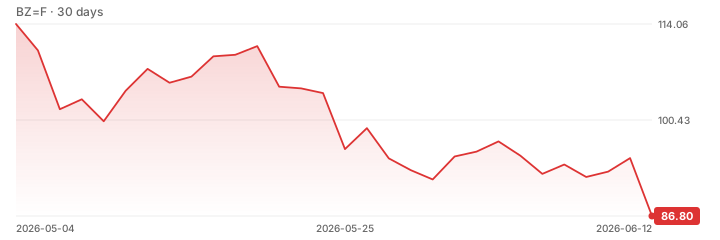
The threat intensifies the risk premium embedded in global energy markets.
The Strait of Hormuz remains the critical bottleneck for a significant share of the world's oil and liquefied natural gas exports.
Any perception of increased military confrontation or route disruption directly impacts shipping insurance costs and freight rates, while also weighing on crude oil prices.
Markets are likely to react to the heightened uncertainty with renewed volatility in Brent crude and tanker equities, as traders price in the potential for supply chain interruptions.